Helium Smart Air
A 0.8 ton AC at ₹16,999, sold online, in a category that has not changed in thirty years.


What happened in just 90 days?
A brand that did not exist in March. These are the numbers it was doing by the end of the season.
What was Helium actually selling?
A 0.8 ton AC at ₹16,999, sold online, in a category that has not changed in thirty years.
A size the category had never bothered to market.
Low enough to be read as cheap, which is the danger.
A purchase people had only ever made in a shop or on a marketplace.
Three of the four Ps were already locked. The whole brand had to be won on the fourth.
Why was it a challenge?
- 01
Few people bought a ‘cheap’ AC.
- 02
Few people bought a 0.8 ton AC.
- 03
Few people bought an AC from a D2C website.
But why did no one believe in it?
Few people bought a cheap AC
because cheap means bad quality.
Few people bought a 0.8 ton AC
because no brand ever marketed one.
Few people bought an AC from a D2C site
because it is an AC, not sunscreen.
So how do you even position it?
So we flipped the narrative.
Few people bought a cheap AC
but everyone will buy a great AC at a great price.
Few people bought a 0.8 ton AC
because no one told them 0.8 ton is often all they need.
Few people bought an AC from a D2C site
because no one built a buying experience they could trust.
The Brief
Helium Smart Air came to us with a 0.8 ton AC priced at ₹16,999 in a highly competitive and established category. They had raised $2M in seed funding. The challenge was to make the brand feel aspirational and credible without competing on discounts or low pricing, while scaling revenue through the peak summer season.
A low price, and the easiest ad in the category to make.
Win on price in year one and you are the cheap brand forever.
Make people want the product. Never the discount.
And the clock: 90 days. An Indian AC brand earns its entire year between April and July.
How someone actually buys an AC.
Nobody decides in one sitting. Five separate moments, spread over days, mostly on a phone.
- Discovery1
They see the brand
Scrolling Instagram or YouTube. Not shopping for an AC. The brand finds them.
“Never heard of this.”
- Consideration2
They search about it
First proper look at the product. The question is whether this brand looks real.
“Is this a serious company?”
- Conviction3
Convinced about value
A performance ad makes a single value proposition land. Now there is a reason to want it.
“Okay, but why this one?”
- Validation4
They go looking for proof
YouTube reviews, Instagram profile, in someone else’s words, not the brand’s.
“Does anyone independent back this?”
- Purchase5
They order
Back to the same website, this time with the doubt already dealt with.
“Fine. Buying it.”
You need to be present everywhere the customer is.
Nobody roots for the giant, so you
become the underdog.
The category was decided long before Helium existed. So we did not enter it. We positioned against it.
The market was already captured
A new brand gets one line in someone’s head, if that. It has to be repeatable, and it has to be worth repeating.
Every old industry has habits nobody defends. Oversized units. Jargon. Service sold upfront. Free material.
A new entrant that names the incumbent gets something the incumbent cannot buy: people who want it to win.
“Don’t pay for Marketing. Pay for Cooling.”
How do you communicate
the positioning?
None of the five were features. Each one named a habit of the category and put Helium on the other side of it.
01It is the right size
A 1.5 ton unit pushed as the safe default, into Indian rooms that never needed one.
0.8 ton, sized for the room. You stop paying to cool air you never use.
02Anti-incumbent
Sold on star ratings, inverter grades and compressor jargon a buyer cannot decode.
No jargon. The product explained in the words the buyer would use.
03Service you actually need
Annual contracts and extended cover sold upfront, before anything has broken.
You pay to fix what broke. Nothing sold before it is needed.
04Built for your weather
One national specification. The same machine for a humid coast and a dry desert.
It adjusts. Mumbai is humid, Jaisalmer is dry, and the AC knows the difference.
05₹30 a day to run
Compete on sticker price and festive discounts. The running cost is your problem.
The cheapest AC to own is the cheapest to run. ₹30 a day.
Five messages. Five habits of the category, each one turned into a reason to switch.
We built the message before building the ad.
A smaller AC isn't a cheaper AC. It's a smarter one.
Every reason to buy
Written as its own ad.
Communication testing ads
All of them, live, together.
The market picked
We picked the winning message on the test results.
Top 5 communications
That actually landed.
Five reasons survived.
Not one of them was the price.
0.8 ton. You stop paying to cool air you never use.
No industry jargon. No unnecessary complexity.
You pay to fix what broke. Nothing sold upfront.
Mumbai is humid. Jaisalmer is dry. It adjusts.
The cheapest AC to own is the cheapest to run.
How do you pick a channel?
One rule. If we could not measure what came back, we did not buy it.
What we bought
Instagram Ads
Cost per click, cost per order, readable in the same week you spent it.
Google Ads
The intent is already there. You see the search, the click and the sale.
YouTube Reviews
Placed with creators, tracked on links. Third-party proof you can still count.
What we did not
Billboards
No way to tie a rupee spent to a rupee that came back.
TV ads
Large minimums, and an answer that arrives a quarter late.
Both work at scale, for brands that can afford to wait. We had ninety days and one summer.
An early-stage startup cannot wait months to find out whether something worked.
We had a message. We still had no trust.
A stranger with a good line is still a stranger.
A known face
The only thing that fixes trust fast.
Budget capped
Before any name is discussed.
Audience surveyed
A shortlist, measured.
Sumeet Vyas
Survey-picked, not guessed.
A known person lends the brand belief it has not earned yet.
A recognisable face buys the first three seconds.
Casting a known face is a data decision. Not just a taste decision.
The ad can be forgettable.
The face can be forgettable.
The brand cannot.
Traditional advertising sells the film. People remember the face, the joke, the line, and forget whose product it was. We built every frame the other way round: the only thing you carry out of it is Helium.
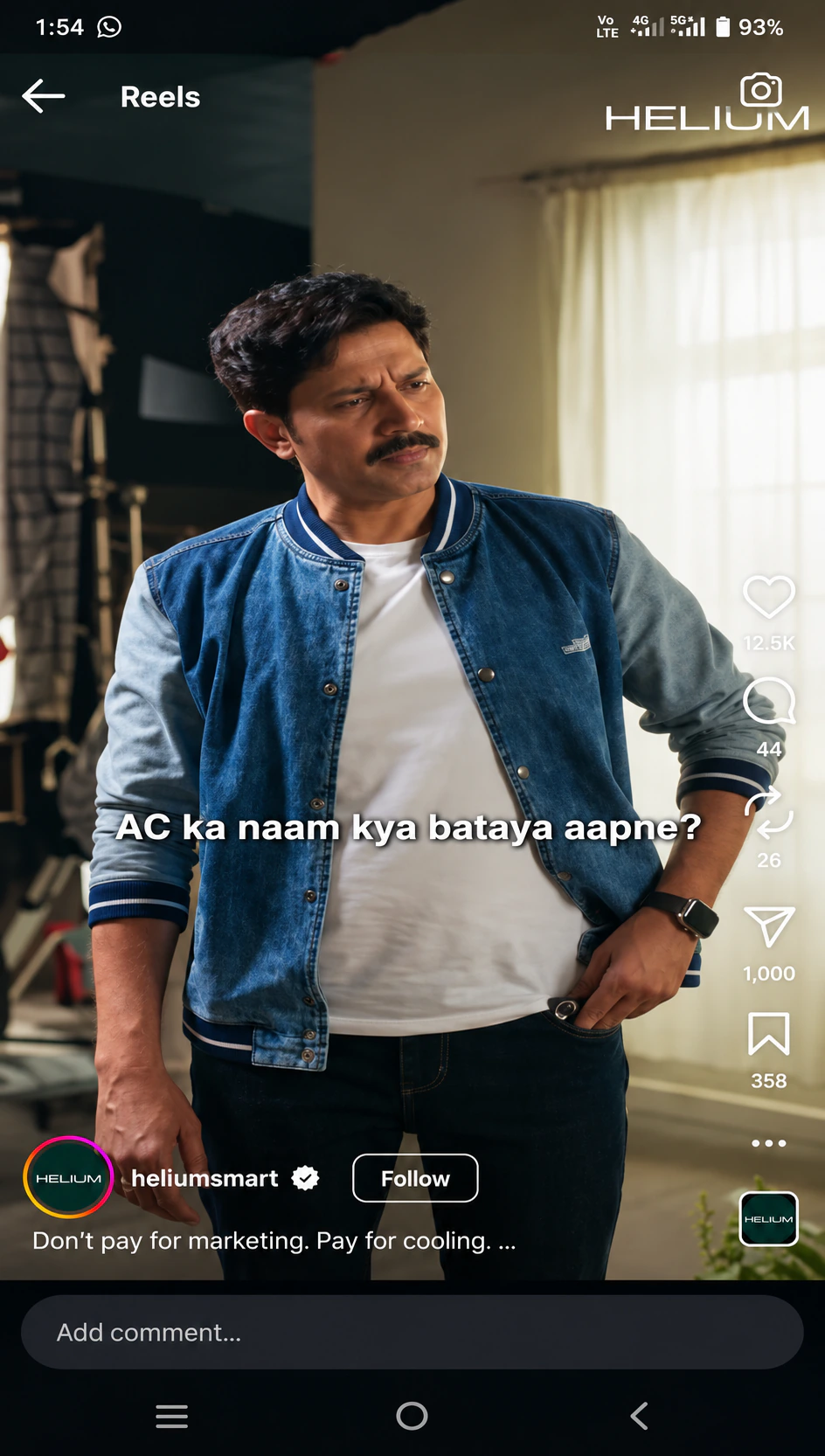
“Don’t pay for marketing. Pay for cooling.”
We put the founder up front.
Nobody else can rent your founder.
The Founder
on Camera
No fee, no contract, and nobody can outbid you for him.
A hired face is available to anyone with a budget. The person who built the product is not. It made the ads unmistakably ours.
Putting your own face on a claim means you carry the consequence of it being wrong. Buyers read that, even if they never say it.
Building in public reads as confidence. For a four-month-old brand, a founder on camera is the cheapest version of it.
A celebrity buys attention and trust. A founder buys belief.
One reason each.
Five films, five messages. No omnibus ad trying to say everything at once.
Each film argues one thing and stops. That is what makes them testable, when a film underperforms you know exactly which claim the market rejected, not just that “the creative did not work”. All hooks start with talking about the AC.
- Discovery1
They see the brand
Scrolling Instagram or YouTube. Not shopping for an AC. The brand finds them.
“Never heard of this.”
- Consideration2
They search about it
First proper look at the product. The question is whether this brand looks real.
“Is this a serious company?”
- Conviction3
Convinced about value
A performance ad makes a single value proposition land. Now there is a reason to want it.
“Okay, but why this one?”
- Validation4
They go looking for proof
YouTube reviews, Instagram profile, in someone else’s words, not the brand’s.
“Does anyone independent back this?”
- Purchase5
They order
Back to the same website, this time with the doubt already dealt with.
“Fine. Buying it.”
Ten ads about nothing but
features and value
One last leg of convincing was left.
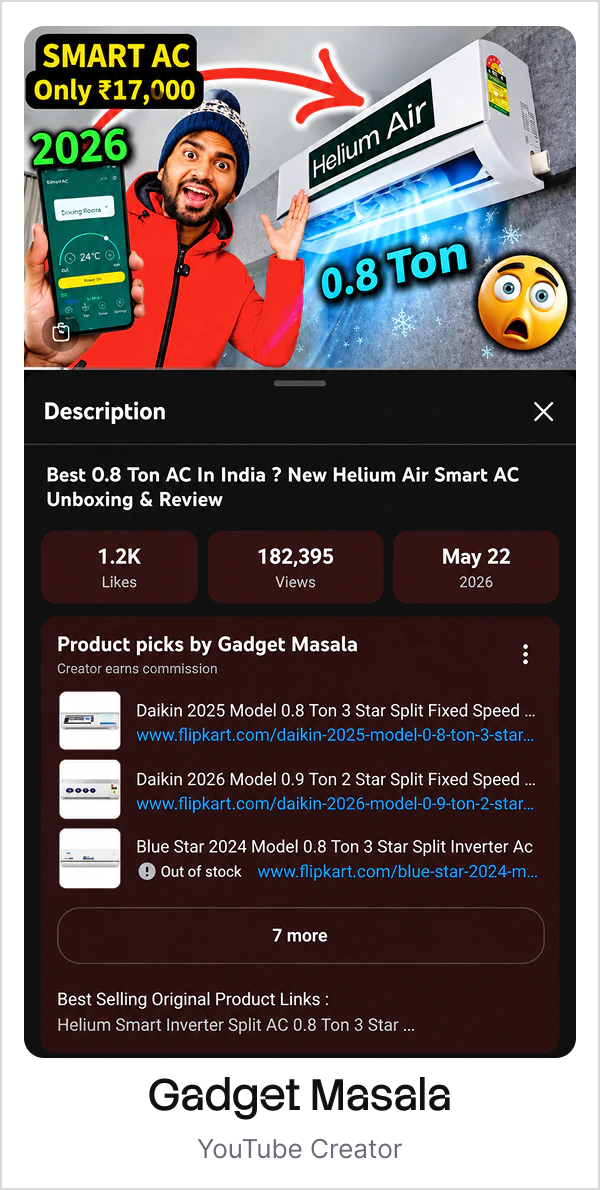
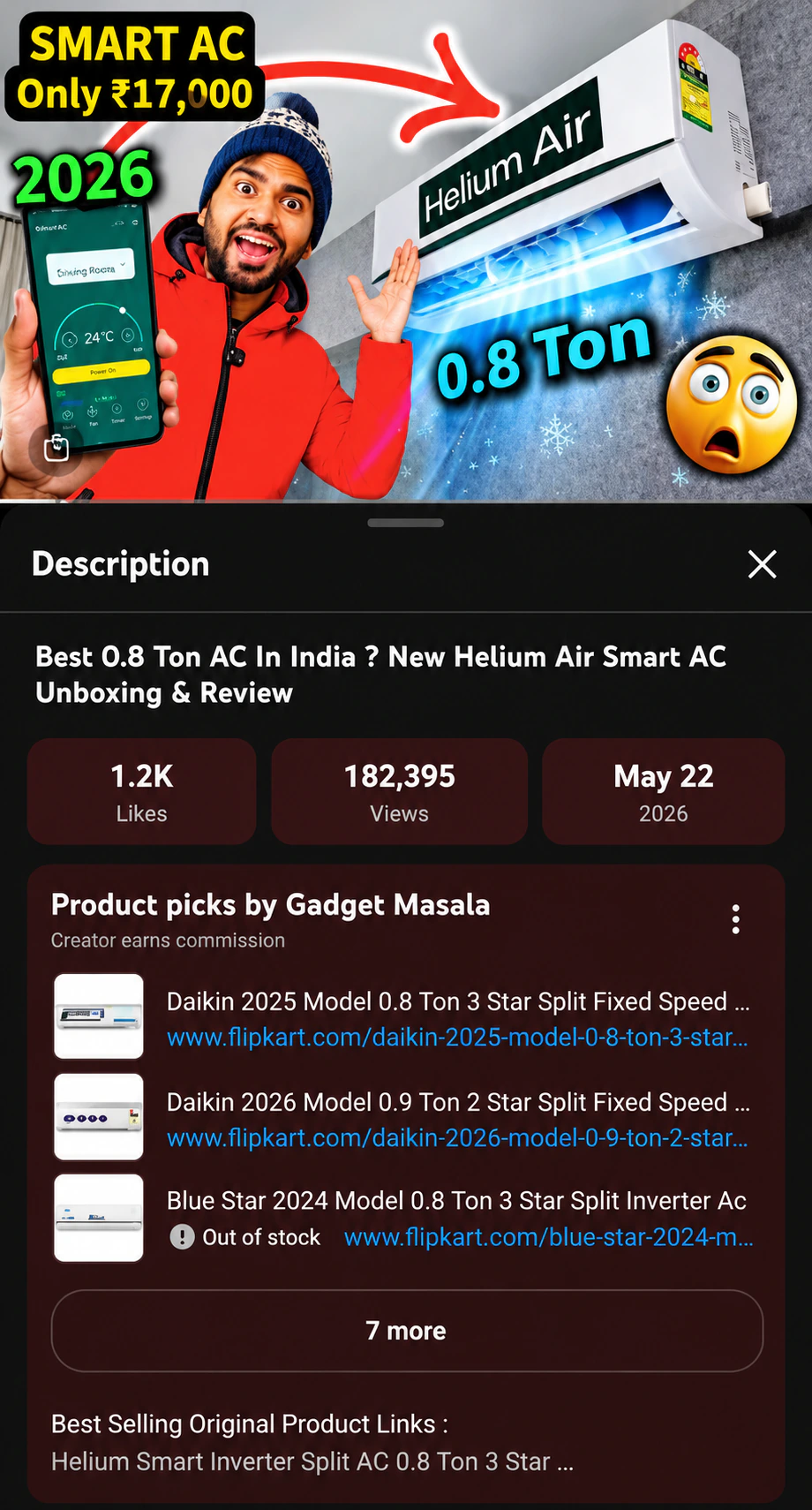
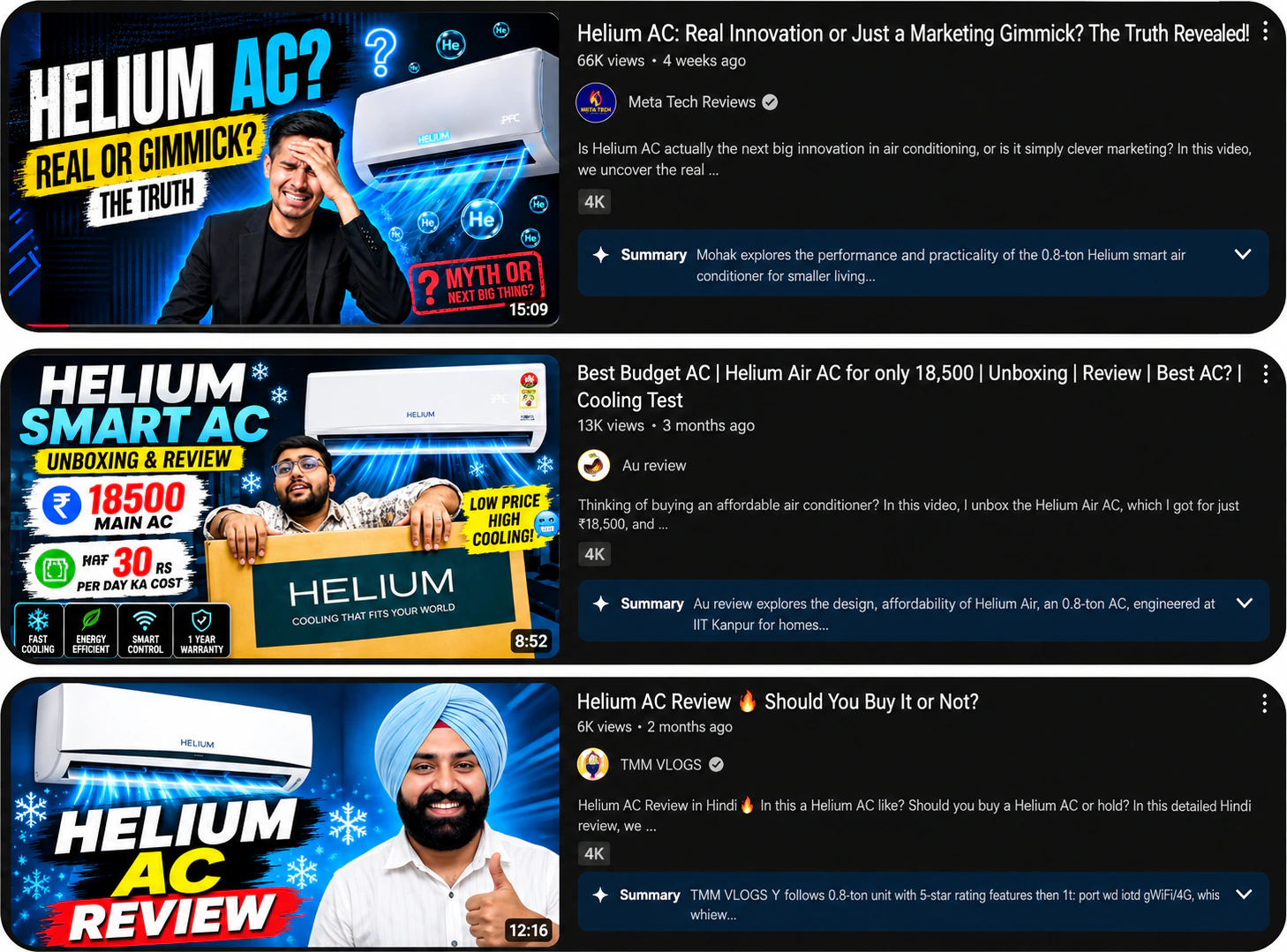
We placed reviews with YouTube creators before we even hit the market.
In April, a buyer had nothing to go on. No ratings to read. Nobody in the building who owned one. Nothing to search.
So we placed the product with two channels this audience already trusts, for hands-on reviews in their own words. Outside our control, which is exactly why it works.
We built the story. Someone else made it believable.
We engineered the whole journey.
Not the ad, the whole path from first sighting to checkout.
Brand Films
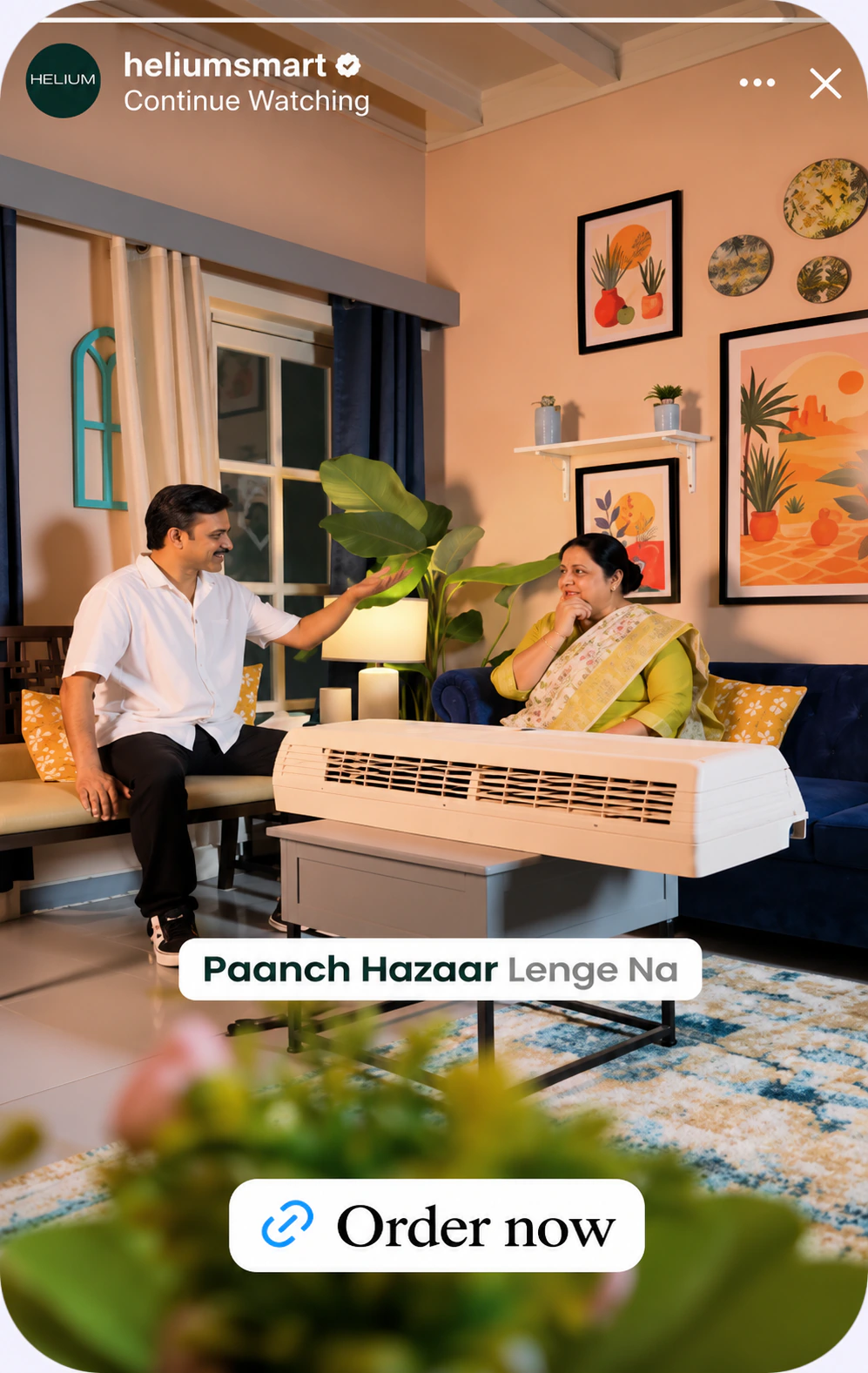
Sumeet Vyas introduced Helium and built the first layer of trust.
Performance Ads
One sharp reason, delivered while they were still deciding.
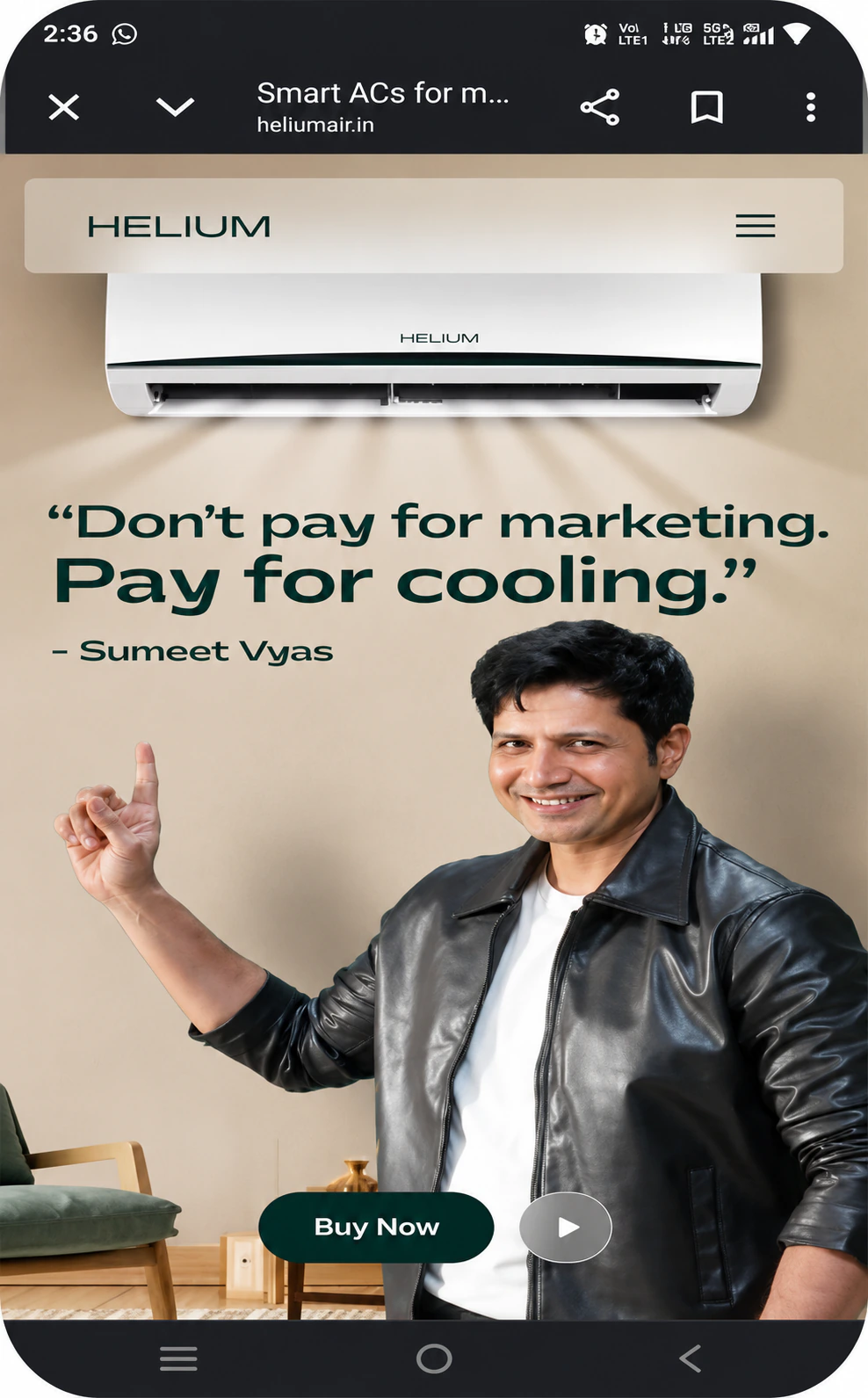
The Website
The same face, so the brand felt familiar and consistent.
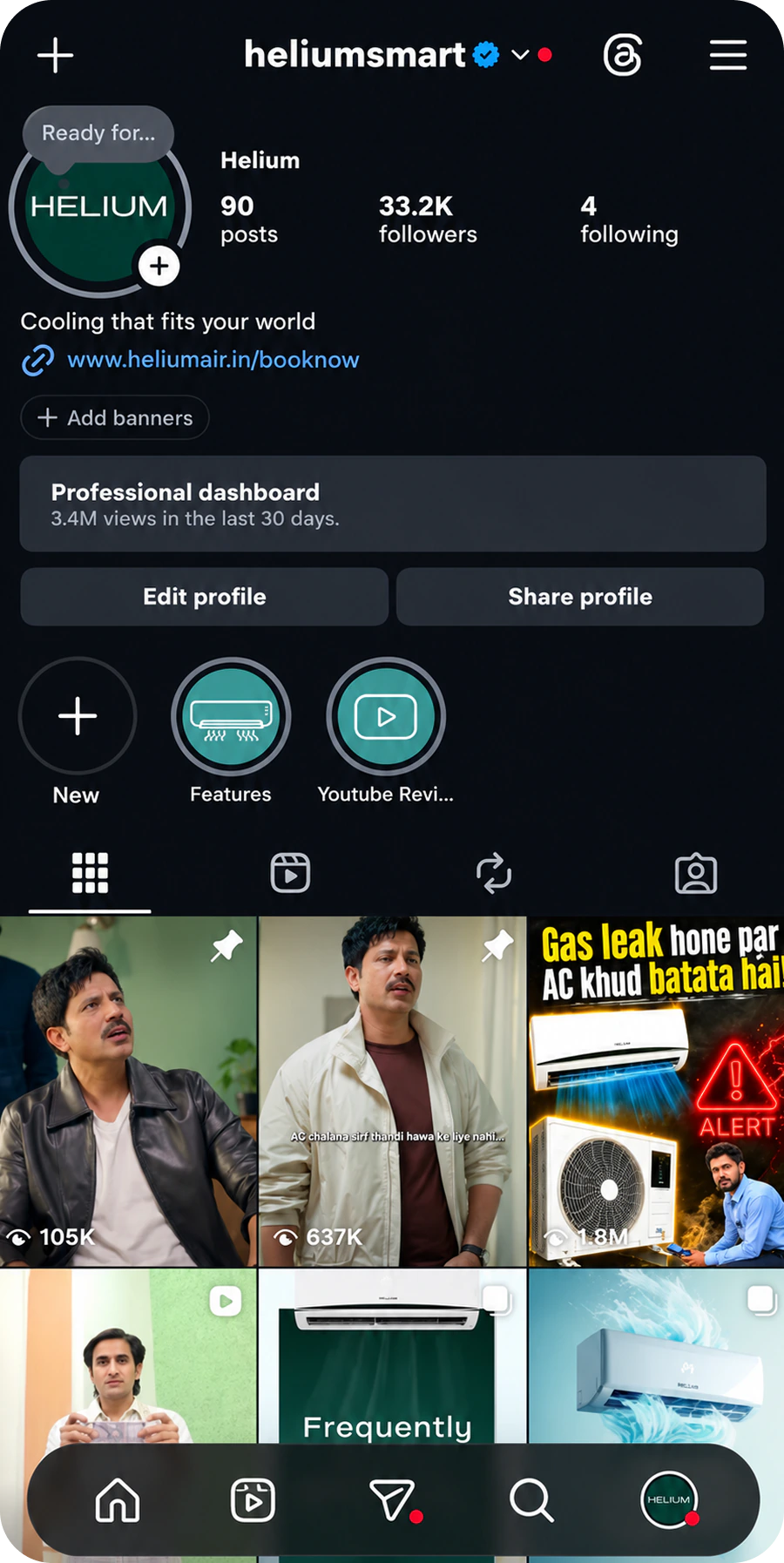
YouTube Reviews
When they went looking for proof, Helium was already there.
Checkout
The last step was not convincing. It was making it easy.
Five touchpoints. One story. No gap to fall through.
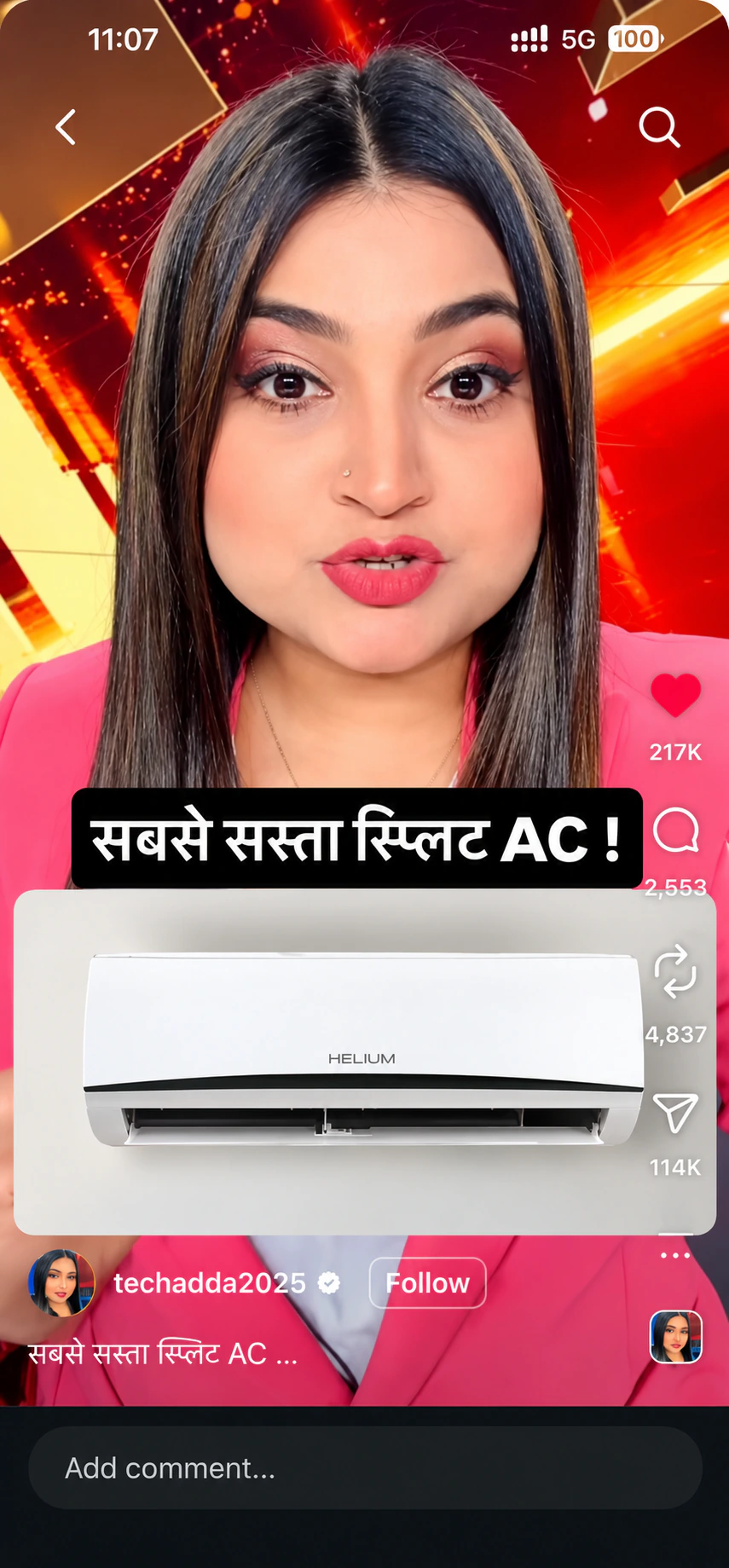
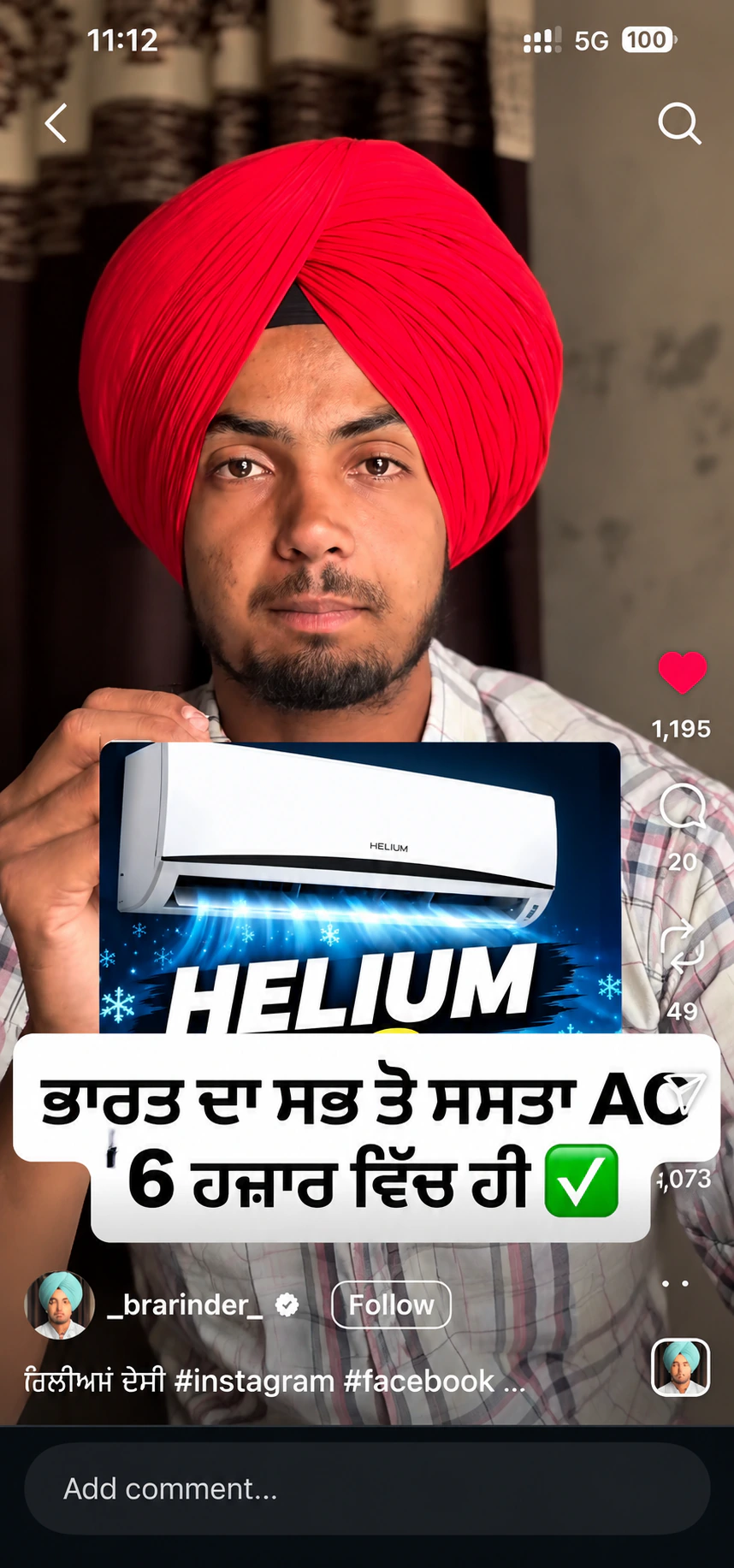
People started talking about the brand on their own.
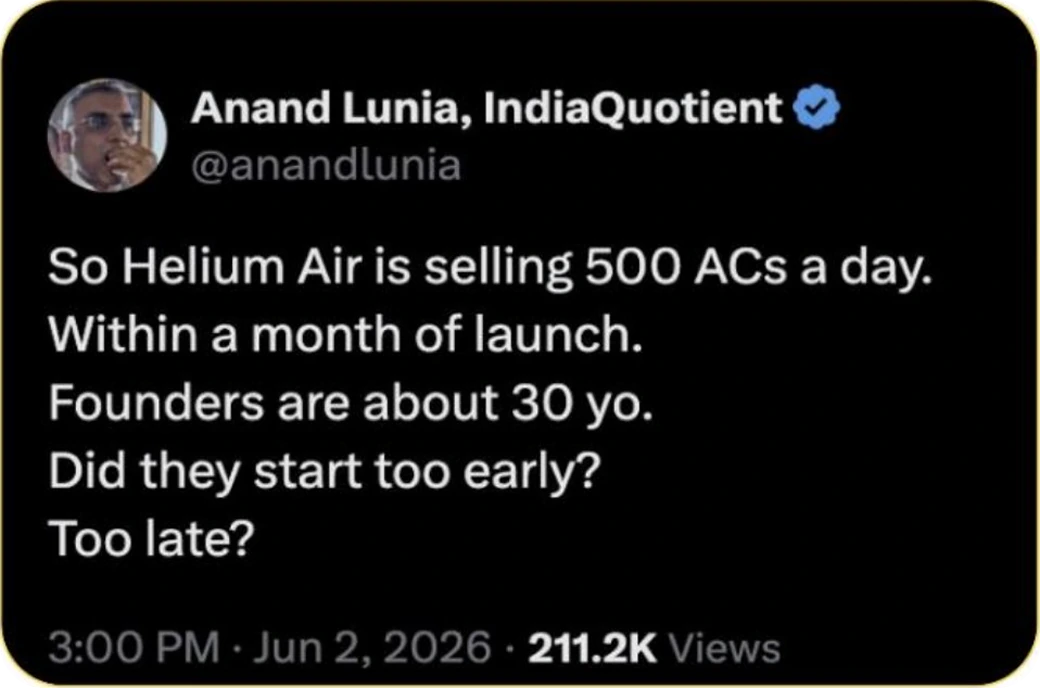
The investors were happy too.
More deep dives.
See all case studies
PlatinumRx leveraged celebrity and UGC assets to increase reach 3x in 3 months
 Stealth App
0 to 300k paid users in 80 days

Masai’s performance marketing scaled by 20x in 10 months


CuriousJr observed a dip of 25% in CAC with UGC creatives


ApnaMart builds absolute category authority in staples category


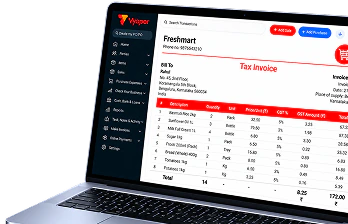
Vyapar built its category authority through its businessman-first brand narratives

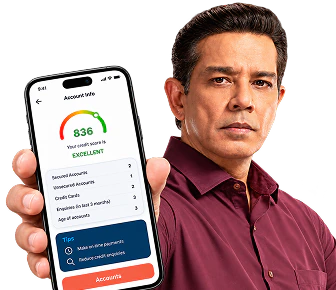
GoodScore reduced creative costs by 75% with celebrity performance assets
ApnaMart lifted online delivery adoption 4.2x with offline and online marketing


Seekho achieves 23% dip in CAC with celebrity performance marketing


NeuralGarage is cracking global marketing at Indian costs